
Best Online Communities For Actors
Finding community as an actor isn’t just about networking for career opportunities. Support, learning, and not feeling alone in such a fiercely competitive field can make a big difference. Online communities fill this gap in ways traditional networking never could. Let’s check out the best online communities for actors, what each one brings to the table, and why joining these groups just might make it easier for you to thrive along your acting adventure.

Why Online Communities Matter for Actors
Actors today juggle a lot—auditions, day jobs, side projects, and maintaining a social media presence. Sometimes, this path feels solitary. That’s where online communities come in. These spaces bring folks together to swap audition tips, share stories about working with agents, and bond over the ups and downs unique to the craft.
I’ve found these groups give a boost by offering resources you might not easily find elsewhere. Whether it’s script libraries, technical advice on self-taping, or moral support during dry spells, the benefits are huge. Most importantly, these spaces nurture confidence and can help form friendships that extend beyond the current show or casting call. For actors, it’s less about just job-hunting and more about stumbling upon your creative circle.
Types of Online Communities for Actors
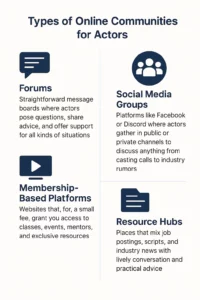
There’s no single version of an online acting group—each has its own vibe. Here are some popular ones you might stumble upon:
- Forums: Straightforward message boards where actors pose questions, share advice, and offer support for all kinds of situations.
- Social Media Groups: Platforms like Facebook or Discord where actors gather in public or private channels to discuss anything from casting calls to industry rumors.
- MembershipBased Platforms: Websites that, for a small fee, grant you access to classes, events, mentors, and exclusive resources.
- Resource Hubs: Places that mix job postings, scripts, and industry news with lively conversation and practical advice.
Each type brings advantages and potential drawbacks. Give a couple a try to see which matches your needs and energy.
Getting Started: What to Look for in an Actor Community
Jumping into the first large group you find might seem efficient, but digging in a bit deeper pays off in the end. It helps to pick a community focused on your current stage and interest. If you’re new, beginner spaces where curiosity is valued are ideal. If you’re more seasoned, industry-specific circles with casting calls and workshops could offer the boost you want.
- Moderation and Tone: Is the group welcoming? Do moderators keep the space upbeat and spam-free?
- Activity: Is the discussion lively? Or does it mostly consist of old, forgotten posts?
- Resource Sharing: The best groups pass around docs, audition lists, or host live Q&A sessions—super helpful for actors no matter their level.
Don’t be afraid of a little trial and error. Try out a space, and if it doesn’t fit, move on until you find your people.
Top Online Communities and Where They Shine
Over the years, I’ve checked out a huge range of online spaces for actors. A handful rise above the rest for quality, activity, and genuine connection:
- Backstage Community: Far more than simple casting calls. Their forums bustle with threads about dealing with rejection, technical how-tos, and business advice. Quick responses are common, making it a goldmine for both practical and emotional support.
- Actor’s Green Room: Famous for online workshops, cold reading clubs, and industry Zoom events. The vibe encourages asking questions and seeking honest feedback. Perfect for connecting and learning in real time.
- Reddit (r/acting): Reddit’s acting hub covers everything—career bumps, school debates, agent strategies, and advice-giving rants. The mix of humor and expertise makes it lively and down-to-earth.
- Stage 32: A global collective that unites actors, writers, producers, and crew. You can post resumes, swap tips, and even join virtual pitch sessions. It’s one of the most collaborative spaces out there.
- Facebook Groups (like The Paid Actor and Audition Updates): Easy to search for your specialty, whether it’s voice acting, improv, or your local film scene. Many groups keep up-to-date casting info, so stay tuned if you’re job-hunting or looking for fresh contacts.
- Discord Servers: The new kid on the block, but spaces like “Actor’s Lounge” and “Actor’s Network” run script swaps, study sessions, and live group chats. Real-time responses make it stand out from the rest.
Scoping out a few of these can quickly widen your support network. Some require an account or a small membership fee, but plenty offer open-access resources and conversations.
Practical Steps: How to Get the Most Out of Online Communities
It’s easy to feel overwhelmed by big online groups, but starting small helps. I start by skimming recent threads to pick up on the tone before jumping in. Here’s what works for making the most of your time:
- Introduce Yourself: Most groups love welcoming newcomers. Share who you are, what stage you’re at, and what you hope to get from the group.
- Ask Targeted Questions: Instead of “How do I get an agent?” try something like, “I’m in Chicago, have some theater experience—what steps got you your first agent?” You’ll get advice that makes sense for where you’re at.
- Contribute and Share: Found a great resource? Heard about a last-minute gig? Passing it on helps everyone. Givers stand out and people remember you down the road.
- Make Direct Connections: If you click with someone, message them for a deeper conversation or virtual meetup. Real friendship and networking happen person-to-person, not just in comment threads.
Checking in every few days helps you stay in the loop and can make even big groups feel familiar over time.
Common Challenges and How to Find Your Way Through Them
Most online acting circles are positive, but a few bumps are common:
- Negativity and Gatekeeping: Jaded pros sometimes insist things “can’t be done.” Listen, but remember: no two paths are the same.
- Spam and Bad Info: Not every casting notice or opportunity is real. Choose groups with active moderation, and always double-check offers before sharing personal details or money.
- Information Overload: Sometimes, too much activity gets in the way of your focus. Mute notifications or log out for a breather when you need to recharge.
I’ve bailed from groups where the energy was off or the focus didn’t line up with my goals—your gut’s a good guide when figuring out which communities add value.
Protecting Your Personal Info
Always be cautious with private info like your home address, phone, or employment history. Good spaces don’t pressure members to overshare. Stick to basic intros and move to private messages if trust is built and you want to share more details.
NextLevel Cool Features in Standout Communities
- Script Libraries: Plenty of groups put out free scripts for audition prep or scene work. These are a lifesaver when you need new material in a pinch.
- SelfTape Review: Getting honest notes on your tapes or reels is super valuable, and many spaces have dedicated threads for this nowadays. Peer feedback can level up your game quickly.
- Virtual Events: Look for group challenges, online table reads, or Zoom mixers. These activities help bridge digital group life and the real, onstage experience.
- Job Boards and Gig Alerts: Aggregated gig lists are especially priceless for niche or regional work. Stay active and you’ll spot the right opportunities at the right time.
These features make the difference between a passive hangout and a true actor resource. I always keep them in mind when recommending a group to someone new.
RealWorld Examples of Actor Success
Actors I know have landed agents thanks to a single thoughtful post. Others found roommates, built home self-tape setups from group tips, or even ended up being hired at local casting companies—all from online connections. Some of my longest theater friends started with a random comment thread or funny meme on Discord.
The main point: visible and helpful community participation pays off more than you’d expect. Being present online really can open up real-world doors, both personally and professionally.
Frequently Asked Questions
Where should new actors start online?
If you’re just launching your journey, check out beginner-friendly forums or Facebook spaces where newbies are welcome. The Backstage Community is especially handy for newcomers just learning the ropes.
Is it safe to reply to casting calls posted in these groups?
Always double-check the poster’s credibility, ask the group about their rep, and do a quick web search outside the group. Good online spaces look out for each other and flag shady leads fast.
How do I avoid getting overwhelmed by notifications?
Easy—adjust your group preferences to mute or limit alerts. Logging on once or twice a week is all it takes to keep up without burning out.
Getting the Most From Online Actor Communities
Joining a couple of online spaces can turn the acting adventure from lonely to community-powered. With a little experimenting and curiosity, you’ll find places that offer advice, support, and maybe even your next booking. Keep an open mind, look after your privacy, and remember there’s a wide digital world full of fellow actors ready to back you up. Your next opportunity or creative partner just might be waiting in the next thread.